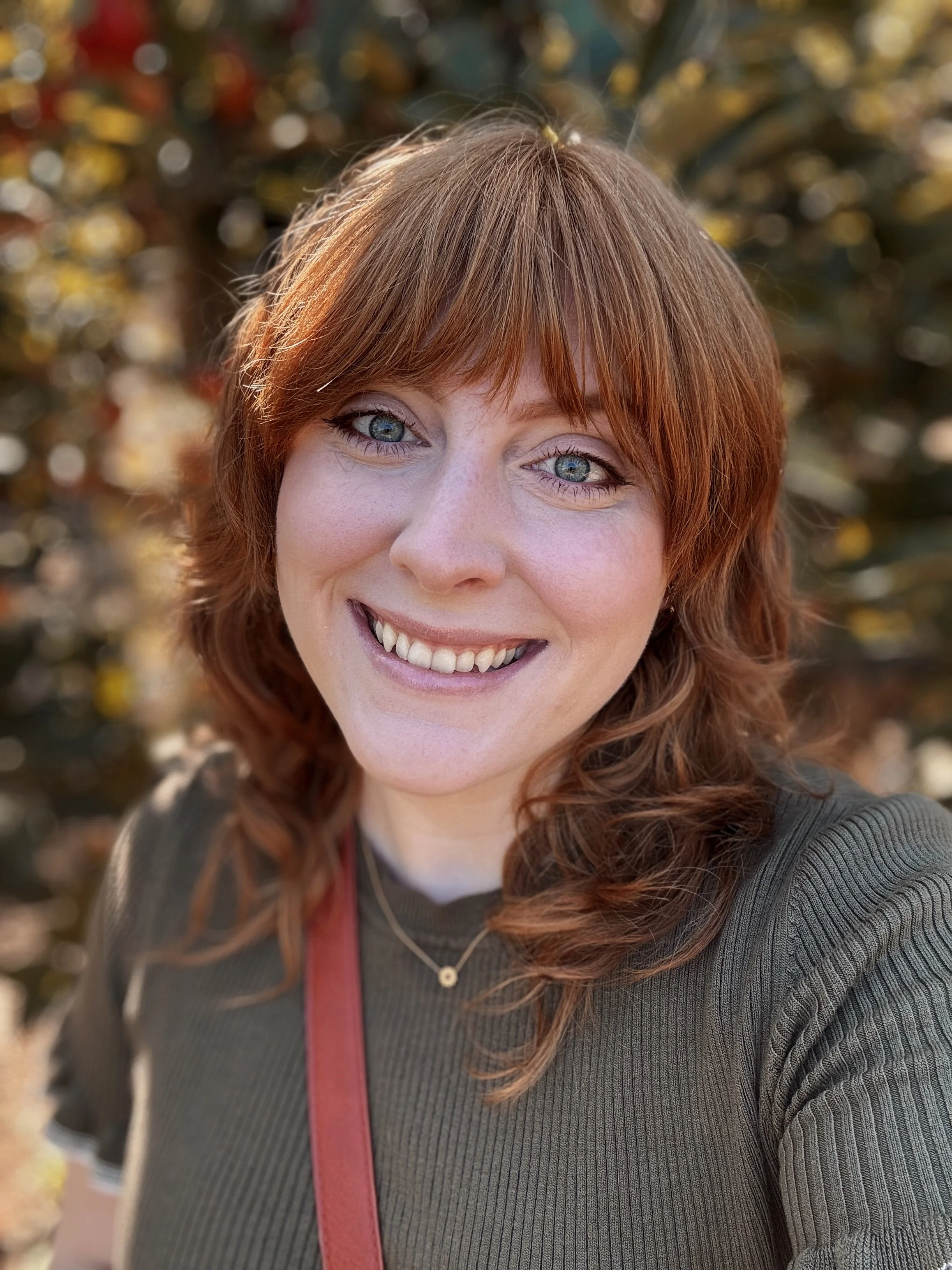
Hi, I’m Alexis Hollingsworth.
I'm a Licensed Clinical Social Worker (#132279) based in Gilroy, California. I work mostly with young adults dealing with anxiety, depression, life transitions, and the whole "who even am I" identity stuff. I see clients virtually all over California, Bay Area, Sacramento, LA, and everywhere in between.
I've been doing this since 2022 and got fully licensed on my own in 2025. But before I was a therapist, I was the one struggling. I was diagnosed with persistent depressive disorder at 23, but honestly it had been part of my life since middle school, long before I had a name for it. I know what the low lows feel like. The days where getting out of bed takes everything you've got, and even small tasks feel exhausting for no clear reason.
I was also diagnosed with social anxiety, and it basically ran my 20s. It made college really hard. Socializing, making friends, forming any kind of meaningful connection felt like a skill everyone else had already figured out except me. I spent a lot of that time feeling stuck and isolated, wondering what was wrong with me.
That's a big part of why I do this work now. I know what it's like to feel lost in your own head, and I know how much it helps to have someone in your corner while you figure things out. Therapy didn't fix everything for me overnight, but it gave me tools and language and support that changed how I related to myself, and that's what I want to offer the people I work with.
My sessions are meant to feel like an actual conversation, not a clinical interview. Somewhere you can say what's really going on instead of the "I'm fine" version. I'm certified in ACT, and I also pull from CBT, DBT, and mindfulness depending on what's useful for you. The goal is helping you build some resilience, get back in touch with what actually matters to you, and feel more at home in your own life.
Right now I'm fully virtual, working with folks across California. I genuinely love this work, and I feel lucky to be part of people's process when they're ready to start sorting things out.
Outside of work, I'm usually drawing, baking something questionable for my health, playing video games, or being supervised by my two cats while I do any of the above.
My Approach
I lead with a person-centered approach, which basically means you're the expert on your own life, not me. My job isn't to hand you a list of things to fix or tell you who you should be. It's to actually listen, ask good questions, and help you get clearer on what you want and what's been getting in the way of that. No judgment, no pretending I have it all figured out either.
A lot of my work is grounded in Acceptance and Commitment Therapy, or ACT for short. I'm certified in it, and it's genuinely the framework I lean on most. The short version of ACT is this: instead of spending all your energy trying to fight off anxious thoughts or force yourself to feel differently, we work on changing your relationship with those thoughts and feelings so they have less control over you. We also spend time getting clear on your values, the stuff that actually matters to you, so you can start making choices based on that instead of based on fear or old habits.
In practice this might look like learning to notice a thought without immediately believing it, getting some distance from the "I'm not good enough" type spirals, or figuring out what a meaningful life actually looks like for you specifically, not the version you think you're supposed to want. I also pull in CBT, DBT skills, and mindfulness when it's useful, but ACT is usually the throughline.
One thing clients tell me a lot is that I'm easy to talk to. A lot of people come to me feeling really nervous about starting therapy, sometimes it's their first time ever doing it, and they've told me they felt at ease by the end of our very first session. I think that's because I don't force anything. We move at your pace, not some predetermined pace I have in my head. Sessions feel like a conversation, not a rigid structure or a checklist to get through. If you need to sit with something quietly for a minute, that's fine. If you want to go off on a tangent that ends up being the actual important thing, that's fine too.
Mostly, I just want our sessions to feel like a space where you can be honest, take your time, and not feel like you have to perform being okay.
